简体中文
简体中文
 English


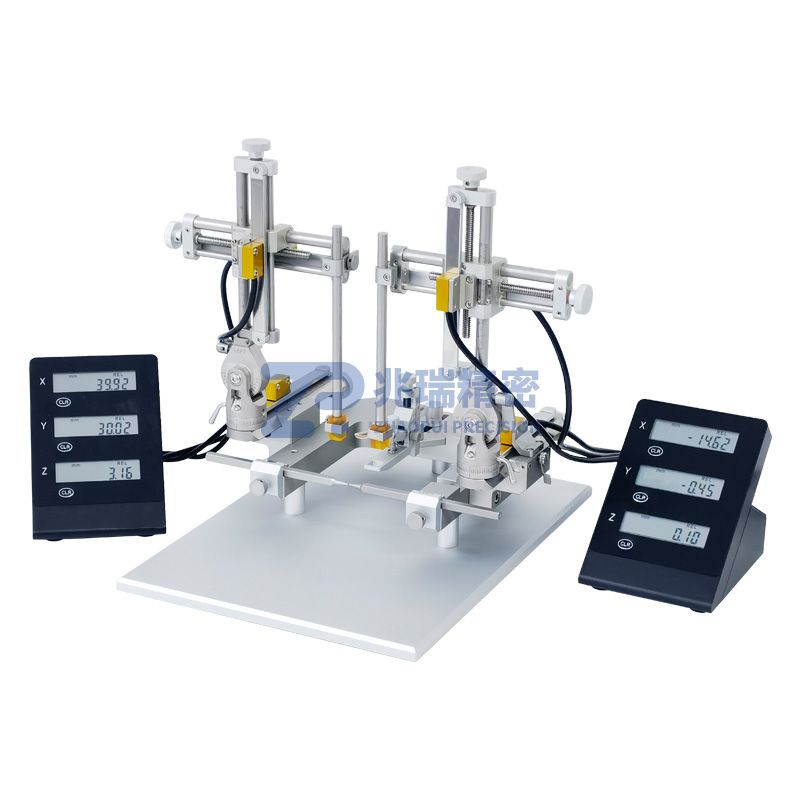
Stereotaxic Instrument Technology and Specific Operating Methods for Rat and Mouse Experiments
Experimental Principle
Stereotaxic technology is widely used for precise positioning in brain lesioning, stimulation and electroencephalogram recording, serving as an indispensable tool for studying brain structure and function. This technology mainly uses a stereotaxic instrument as the positioning device, and adopts a three-dimensional coordinate system defined by certain extracranial landmarks (such as bregma, lambda, external auditory canal, orbital fossa, sagittal suture, etc.) or other reference points to determine the location of specific subcortical neural structures. It enables directional stimulation, destruction, drug injection, potential recording and other studies without direct visual exposure of the target area, and is thus an important research method in the fields of neuroanatomy, neurophysiology, neuropharmacology and neurosurgery. Common laboratory animals including rats, mice, cats and other higher mammals as well as birds all have complete external auditory canals, which can be used for positioning with ear bars. After identifying the extracranial landmarks, positioning operations can be performed according to the data provided by the stereotaxic atlas. Experimental equipment: stereotaxic instrument, MC-5 micromanipulator, routine surgical instruments, drill bit, gauze, dry cotton balls, alcohol, 0.4% sodium pentobarbital (anesthetic, prepared and used immediately), normal saline, 1ml syringe, 3% hydrogen peroxide, mice.
Experimental Procedures
There are roughly two systems for mouse brain positioning:
(1) Positioning by the interaural line center: First, touch the tips of the two ear bars to each other at the middle of the stereotaxic slideway (with the same reading for both ear bars) and tighten the screws. Then remove one ear bar while keeping the other fixed. Adjust the moving propeller to touch the tip of the calibration electrode to the center point of the ear bar tip, which is defined as point A (i.e., the center of the interaural line), and record the scale value. Next, horizontally move the propeller to above the incisor hook, and touch the plane of the incisor hook to the tip of the calibration electrode. This sets the horizontal plane zero point (recorded as H0) between the center of the external auditory canal and the upper edge of the incisor plate. At this point, the bregma and lambda of the animal are basically on the same horizontal plane with a difference of 0-0.1mm. In addition, the direction above the interaural line center is specified as "+", downward as "-"; rostral direction as "+", caudal direction as "-".
(2) Positioning by skull landmarks (bregma is commonly used): The bregma is set as the zero point for the rostral-caudal axis, with the direction rostral to the bregma as "+", caudal as "-". The other positioning methods are the same as above.
Experimental Content
(1) Animal Anesthesia: Select mice weighing 20-30g. After weighing, perform intraperitoneal injection of 0.4% sodium pentobarbital for anesthesia. The injection must be slow, and the animal's condition should be monitored at all times.
(2) Mouse Head Fixation: Fix the mouse's incisors to the maxillary fixator of the stereotaxic instrument. Then insert one ear bar into the animal's external auditory canal to center the animal's head between the two slideways. Insert the other ear bar into the contralateral external auditory canal. Check that the readings of the two ear bars are consistent, then tighten the fixing screws on both ear bars. Press down the nasal ring on the tooth fixator and tighten it (adjust the tightness of the nasal ring and ear bars to an appropriate level). At this point, the animal's head should not move when pressed from any direction.
(3) Skin Preparation Before Craniotomy and Drilling: Shave the hair on the animal's head. Disinfect the scalp with 2% iodine tincture and 75% alcohol cotton balls. Make a 3cm-long skin incision along the sagittal suture, separate the subcutaneous tissue, clean and strip off the fascia and muscles on the skull surface with hydrogen peroxide, push aside the periosteum, and expose the bregma, lambdoid suture and sagittal suture.
(4) Determination of the Standard Midline: Move the metal positioning needle down to above the sagittal suture, then move the positioning needle back and forth to align it with the bregma.
(5) Hippocampal Positioning in Mice: Use the positioning needle to mark a point 2mm caudal to the bregma and 2.5mm lateral to the sagittal suture, which is the horizontal position of the hippocampus. Then drill a small hole in the skull at this point with a drill bit.
(6) Drug Injection: The mouse hippocampus is located 2mm below the drilled hole. Draw the drug into a 1ml syringe and mount it on the MC-5 micromanipulator. Operate the instrument to lower the syringe needle 2mm from the drilled hole in the mouse skull to complete the drug injection into the mouse hippocampus.
(7) Preparation of Brain Tissue Sections: Prepare sections of the mouse brain and observe the position of the red dye in the brain under a microscope to verify the accuracy of the mouse hippocampal positioning.