简体中文
简体中文
 English


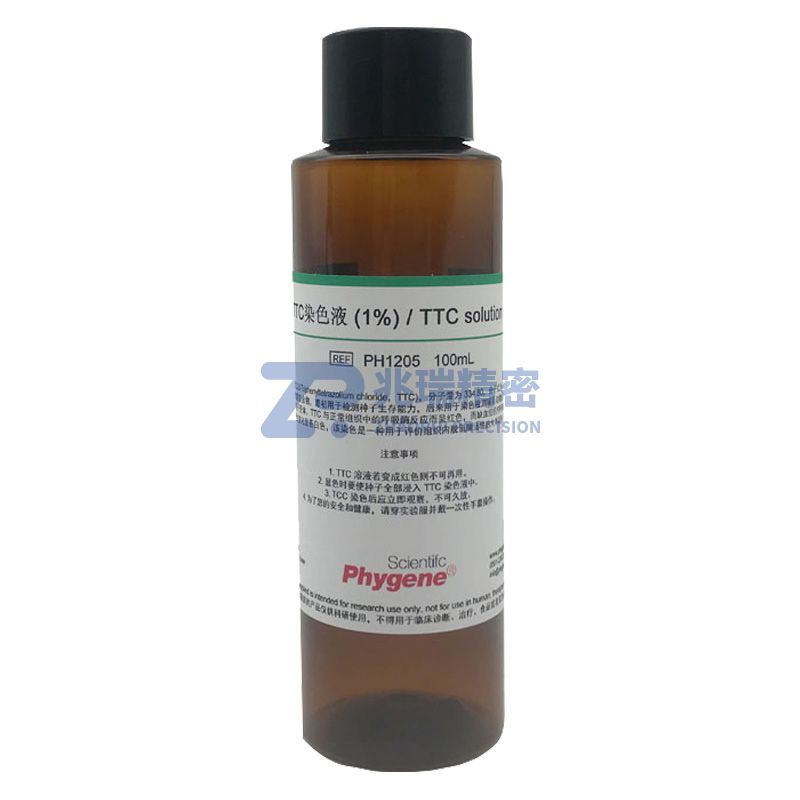
2,3,5-Triphenyltetrazolium chloride (TTC) is a fat-soluble photosensitive complex, commonly used to detect seed viability and ischemic infarction in mammalian tissues. It acts as a proton acceptor for the pyridine-nucleoside structural enzyme system in the respiratory chain and reacts with dehydrogenases in normal tissues to produce a red color. Dehydrogenases in living cells of viable seed embryo tissues can reduce TTC to insoluble, stable red triphenylformazan (TTF). If the embryo is dead or its viability is declined, it cannot be stained or only lightly stained. Therefore, seed viability can be identified based on the stained parts and the depth of staining of the embryo.
Technical Parameters
1. Take the brain tissue sample to be tested (generally, the brain can be taken directly after anesthesia or after perfusion with normal saline), then quick-freeze at -20℃ for 20~30min to facilitate sectioning
2. Section the brain tissue to be tested; generally, the thickness of animal samples is 0.5~2mm
3. Immerse the sections in TTCStain (2%) and incubate in the dark for 25~35min
4. Immerse the sections in 4% paraformaldehyde or 10% neutral formalin for fixation for 4~24h
5. Blot dry the water on the tissue surface, and use image analysis systems such as IPP to measure the cerebral infarction area and calculate the cerebral infarction volume